Bảo hành nội thất không chỉ là một dòng thời hạn trên báo giá. Đó là cam kết: hạng mục nào được sửa, trong bao lâu, bắt đầu từ ngày nào, ai nhận thông báo, và trường hợp nào không thuộc phạm vi. Thiếu các mục này, khi cánh tủ lệch hay cạnh phồng, các bên dễ hiểu khác nhau.
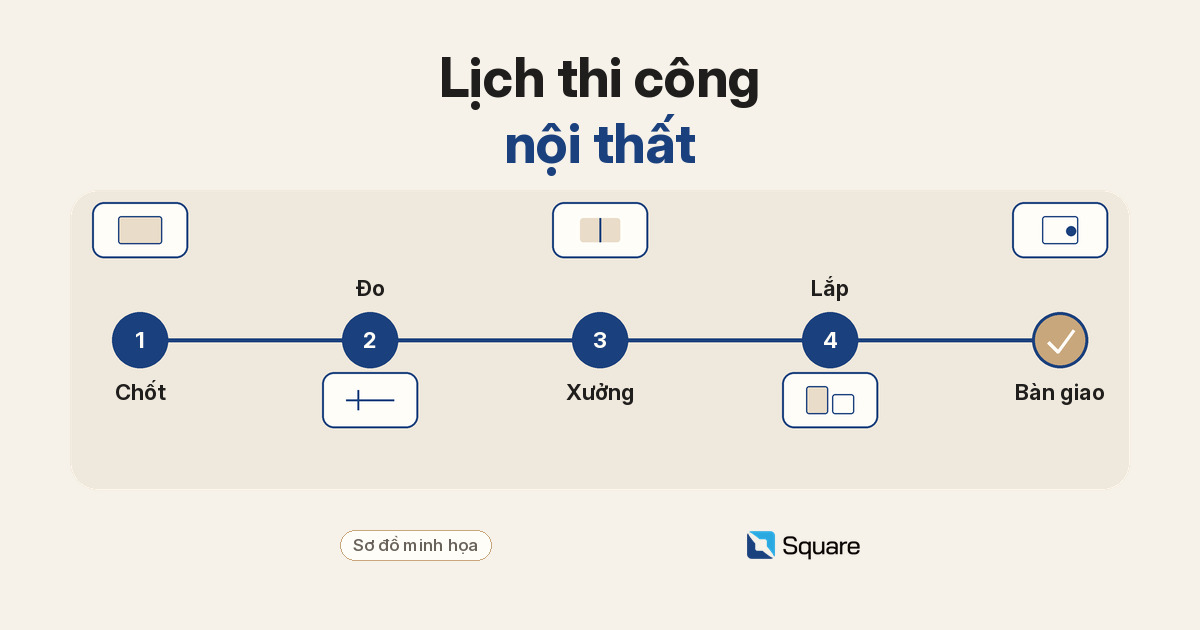
Checklist thực hành do Square biên soạn cho dự án thiết kế – thi công nội thất căn hộ hoặc nhà phố. Không phải biểu mẫu hợp đồng hay tư vấn pháp lý; kết luận cuối phải khớp hồ sơ đã duyệt, thỏa thuận các bên và pháp luật áp dụng. Thời điểm bàn giao nên khớp checklist nghiệm thu nội thất căn hộ và lịch thi công nội thất từ chốt thiết kế đến bàn giao.
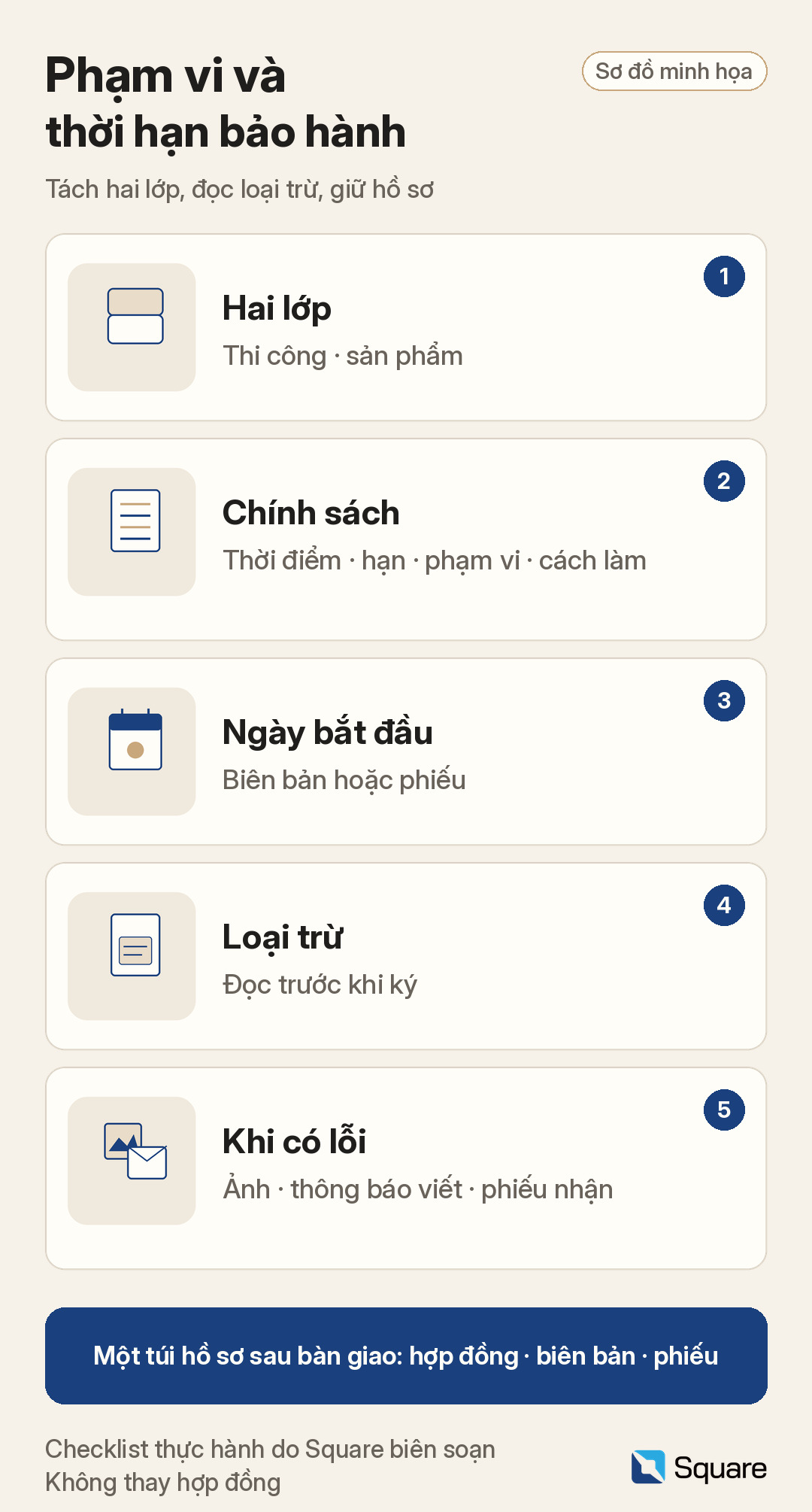
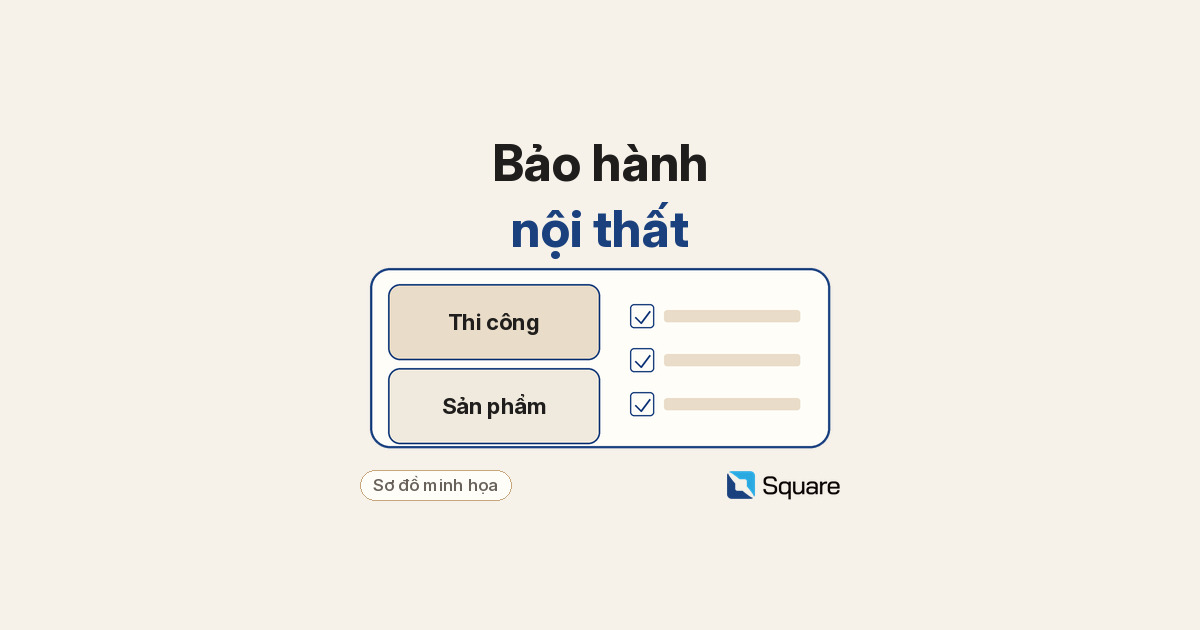
Tách bảo hành thi công và bảo hành sản phẩm
Bảo hành thi công (gia công, lắp đặt) thường do bên thi công cấp: cánh lắp lệch, ke không đều, bợ tủ, mối ghép. Bảo hành sản phẩm (bản lề, ray, mặt laminate, thiết bị) thường do hãng sản xuất cấp, với điều kiện trên phiếu hoặc trang đăng ký đúng mã đã mua.
Hai lớp này chồng lên nhau. Hợp đồng nên nêu ai tiếp nhận khi có lỗi, ai chuyển hồ sơ cho hãng, và việc nào do bên thi công sửa tại chỗ. Vai trò tiếp nhận nên khớp ma trận RACI dự án nội thất.
Những nội dung chính sách cần ghi rõ
Với hàng hóa, linh kiện có bảo hành cho người tiêu dùng, Luật Bảo vệ quyền lợi người tiêu dùng số 19/2023/QH15 (có hiệu lực 01/7/2024) yêu cầu công bố chính sách gồm: thời điểm và thời hạn áp dụng, nội dung, phạm vi, phương thức thực hiện, và trường hợp loại trừ trách nhiệm bảo hành. Hợp đồng nội thất nên viết đủ các mục này theo hạng mục, dù quan hệ pháp lý cụ thể phải đối chiếu hồ sơ — không thay tư vấn pháp lý.
Nên có văn bản hoặc hình thức tiếp nhận khi gửi yêu cầu (ngày nhận, hạng mục, thời gian dự kiến xử lý). Theo luật nêu trên, thời gian thực hiện bảo hành không tính vào thời hạn bảo hành; khi đổi mới sản phẩm hoặc thay linh kiện, thời hạn với phần được đổi hoặc thay được tính lại từ thời điểm đó — áp dụng khi thuộc phạm vi luật và thỏa thuận.
Ngày bắt đầu và đồng hồ thời hạn
Chốt ngày bắt đầu: ngày ký biên bản bàn giao, ngày trên phiếu bảo hành, hay một ngày khác ghi rõ. Nếu bàn giao còn hạng mục treo, ghi hạng mục nào đã chạy hạn và hạng mục nào chờ nghiệm thu lại.
Không lấy dòng thời hạn trên tờ rơi làm căn cứ nếu phiếu, phụ lục hoặc chính sách đã công bố ghi khác. Giữ bản giấy hoặc file cùng họ phiên bản với bản vẽ và báo giá — xem cách khóa phiên bản khi kiểm báo giá từng dòng trước khi ký.
Loại trừ thường gặp — đọc trước khi ký
Đọc phần loại trừ trước khi chốt vật liệu và khi nhận bàn giao. Các nhóm thường xuất hiện trên chính sách (không phải danh mục pháp lý bắt buộc): hư do ngấm nước hoặc rò rỉ sau bàn giao không do lỗi gia công đã ghi nhận; tự ý sửa hoặc thuê bên thứ ba can thiệp; dùng quá tải so với thông số phụ kiện đã nêu; hao mòn thông thường (trầy bề mặt, chỉnh bản lề định kỳ).
Phần loại trừ không xóa nghĩa vụ đã cam kết trong phạm vi bảo hành, cũng không tự viết thêm sau ngày ký. Nếu mặt bằng còn ẩm hoặc thiết bị chủ nhà chưa lắp, ghi vào biên bản để tránh tranh cãi “lỗi thi công hay lỗi sử dụng”.
Khi có lỗi: ghi nhận, thông báo và sửa
Chụp ảnh hoặc quay hiện trạng, ghi ngày phát hiện, mô tả vị trí và mã hạng mục (nếu có). Gửi thông báo bằng hình thức hợp đồng cho phép (email hoặc văn bản) tới người được chỉ định — không chỉ nhắn tin miệng.
Giữ phiếu tiếp nhận, hạn xử lý, và biên bản sau sửa. Nếu cần vào lại căn hộ, ghi lịch và điều kiện mặt bằng (giống khi lắp theo đợt). Đừng tự tháo sửa trong thời hạn nếu hợp đồng yêu cầu để bên bảo hành kiểm trước.
Điều gì dễ bỏ sót — và checklist một trang
- Chỉ ghi “có bảo hành” mà không tách thi công và sản phẩm.
- Không có ngày bắt đầu, hoặc hạng mục treo đã bị tính hạn.
- Loại trừ không đọc trước khi ký; tự ý sửa làm khó việc yêu cầu.
- Thông báo chỉ qua tin nhắn, không lưu ngày và người nhận.
- Thiếu phiếu tiếp nhận hoặc hồ sơ phiên bản cuối lúc bàn giao.
Sau bàn giao, để một túi hồ sơ (giấy hoặc file): hợp đồng, phụ lục, biên bản, phiếu bảo hành, ảnh hiện trạng.
- Danh mục hạng mục: thi công hay sản phẩm, hạn, ngày bắt đầu.
- Chính sách: phạm vi, phương thức, loại trừ, người nhận thông báo.
- Biên bản bàn giao + danh sách lỗi treo (nếu có) + hạn sửa.
- Phiếu hoặc file bảo hành đúng mã vật tư và thiết bị.
- Khi có lỗi: ảnh, thông báo viết, phiếu tiếp nhận, biên bản sau sửa.
Câu hỏi thường gặp
Hết hạn bảo hành thi công thì còn đòi được nữa không?
Tùy thỏa thuận còn hiệu lực, bảo hành hãng (nếu còn hạn), và pháp luật áp dụng. Bài này không kết luận hộ từng trường hợp — cần đối chiếu hồ sơ hoặc hỏi tư vấn pháp lý.
Có cần giữ phiếu và mã thiết bị không?
Nên giữ phiếu, mã model và chứng từ mua đúng hàng đã lắp. Yêu cầu cụ thể của hãng nằm trên chính sách hoặc trang đăng ký của đúng sản phẩm đó.
Ai nhận thông báo khi có lỗi?
Người được chỉ định trên hồ sơ (thường điều phối dự án hoặc bộ phận bảo hành của bên thi công). Thông báo gửi đúng người và đúng hình thức đã ghi mới dễ truy vết.
Cần hỗ trợ chốt nội dung bảo hành?
Liên hệ Square qua trang Liên hệ để trao đổi thiết kế – thi công nội thất và cách ghi phạm vi, thời hạn bảo hành trước khi bàn giao.
Tham khảo thực hành, không thay hợp đồng, biểu mẫu pháp lý hoặc tư vấn pháp lý. Không nêu số liệu thống kê hay số tháng bảo hành mẫu; dẫn Luật 19/2023/QH15 chỉ ở mức chính sách bảo hành công bố; áp dụng theo hồ sơ, thỏa thuận các bên và pháp luật hiện hành.
English version — sentence-aligned with the Vietnamese text above.
An interior warranty is not only a duration line on a quote. It is a commitment: which items will be repaired, for how long, from which start date, who receives notice, and which cases fall outside the scope. When these items are missing, parties often read a misaligned door or a swollen edge differently.
A practice checklist prepared by Square for apartment or townhouse design–build interiors. It is not a contract form or legal advice; the final call must match approved documents, party agreements, and applicable law. The handover moment should match the apartment interior handover checklist and the interior construction schedule from design lock to handover.
Split workmanship warranty and product warranty
A workmanship warranty (fabrication and install) is usually given by the contractor: a misaligned door, uneven gaps, a cabinet out of square, a poor joint. A product warranty (hinges, runners, laminate faces, equipment) is usually given by the manufacturer, on the terms of the card or the registration page for the exact code purchased.
The two layers overlap. The contract should name who receives a defect report, who passes the file to the brand, and which work the contractor repairs on site. The receiving role should match the interior-project RACI matrix.
Policy contents that should be written clearly
For goods and parts warranted to consumers, the Law on Protection of Consumers’ Rights No. 19/2023/QH15 (effective 1 July 2024) requires a published policy covering: the start and duration, the content, the scope, the method, and exclusions from warranty liability. An interior contract should write these items by trade, even though the exact legal relationship must be checked against the documents — this is not a substitute for legal advice.
There should be a written intake, or an equivalent form, when a request is sent (receipt date, item, expected handling time). Under the law cited above, the time taken to perform the warranty is not counted in the warranty period; when a product is replaced or a part is changed, the period for that replaced or changed item runs again from that date — this applies when the case falls within the law and the agreement.
The start date and the warranty clock
Lock the start date: the date on the handover minutes, the date on the warranty card, or another date stated clearly. If handover still has open items, record which items have already started their clock and which ones wait for re-inspection.
Do not treat a duration line on a leaflet as the basis if the card, the appendix, or the published policy says otherwise. Keep the paper or file in the same revision family as the drawings and the quote — see how revisions are locked when checking a quote line by line before signing.
Common exclusions — read them before you sign
Read the exclusions before locking materials and again at handover. Groups that often appear in policies (not a mandatory legal list) include: damage from water ingress or leaks after handover that are not a recorded workmanship defect; unauthorised repairs or third-party alterations; use beyond stated hardware ratings; and normal wear (surface scratches, routine hinge adjustment).
Exclusions do not erase duties already promised inside the warranty scope, and they should not be added after the signing date. If the site is still damp or owner-supplied equipment is not yet installed, record that in the minutes to avoid a later dispute over “workmanship versus use”.
When a defect appears: record, notify, and repair
Photograph or film the condition, note the date found, and describe the location and the item code (if any). Send notice in the form the contract allows (email or a written letter) to the named person — do not rely only on a verbal message.
Keep the intake slip, the handling deadline, and the minutes after the repair. If the team must re-enter the unit, record the schedule and the site conditions (as with a phased install). Do not dismantle or repair it yourself during the period if the contract requires the warrantor to inspect first.
What is easy to miss — and a one-page checklist
- A line that only says “warranted”, with no split between workmanship and product.
- No start date, or an open item whose clock has already been started.
- Exclusions unread before signing; unauthorised repairs that make a claim harder.
- Notice sent only by chat, with no saved date or named recipient.
- No intake slip or final revision pack at handover.
After handover, keep one document wallet (paper or files): the contract, appendices, minutes, warranty cards, and condition photos.
- An item list: workmanship or product, period, and start date.
- The policy: scope, method, exclusions, and who receives notice.
- Handover minutes + open-item list (if any) + fix deadline.
- Warranty cards or files that match the installed material and equipment codes.
- When a defect appears: photos, written notice, intake slip, post-repair minutes.
FAQ
If the workmanship warranty has expired, can you still make a claim?
It depends on any agreement still in force, a brand warranty (if still current), and applicable law. This article does not decide individual cases — check the documents or seek legal advice.
Should you keep equipment cards and model codes?
Keep the card, the model code, and proof of purchase for the exact installed goods. The brand’s specific requirements sit on the policy or the registration page for that product.
Who receives notice when a defect appears?
The person named on the documents (often the project coordinator or the contractor’s warranty desk). Notice sent to the right person, in the stated form, is easier to trace.
Need help locking the warranty terms?
Contact Square via the Contact page to discuss design–build interiors and how to write warranty scope and duration before handover.
Practice reference only; not a substitute for contracts, legal forms, or legal advice. No statistics or sample warranty month counts are stated; Law 19/2023/QH15 is cited only at the level of a published warranty policy; apply per documents, party agreements, and current law.